
Acupressure plates, mats and foot massagers: a retail buyer’s guide
If you are deciding which foot-care wellness products to stock, three types usually come up: non-powered acupressure plates, spike or acupressure mats, and electric foot massagers. This guide compares them from a retailer’s point of view.
Three product types at a glance
Non-powered acupressure plates are rigid or semi-rigid plates with a textured surface, used standing barefoot or, in some designs, seated. Spike or acupressure mats are usually flexible mats covered in small plastic points, often rolled for storage and frequently used lying down. Electric foot massagers are powered devices with motors, rollers or air chambers.
Each type suits a different customer and a different part of the shop, so the right mix depends on your channels rather than on any one product being better.
Three plates, one step-up range
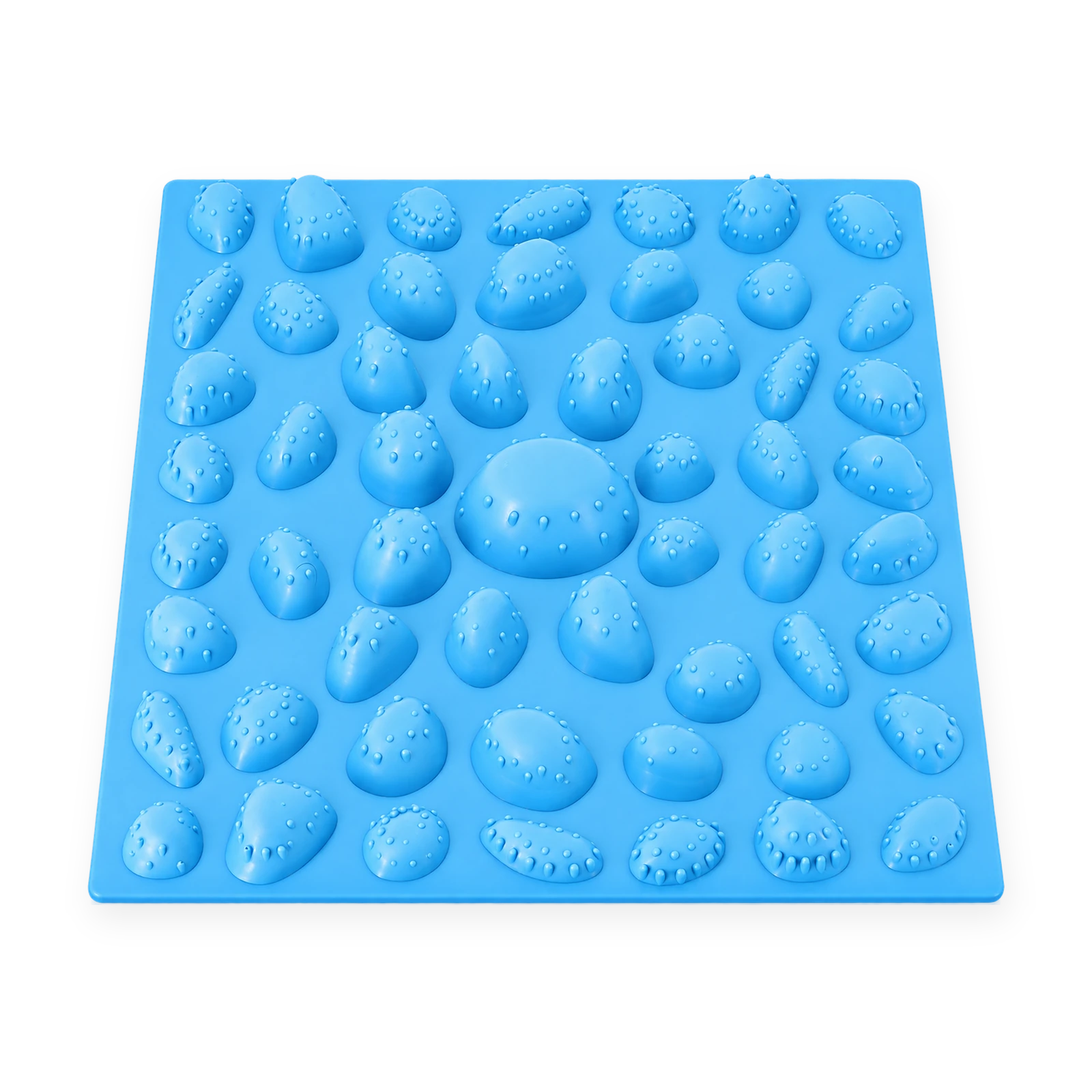
AirSeat
AirSeat is the gentlest plate in the range. Use it on a stable chair or seat, or stand on it barefoot as a gentle introduction before Acu Flex and Pebble Path. Flexible bubbles give a gentle texture, with air channels underneath.
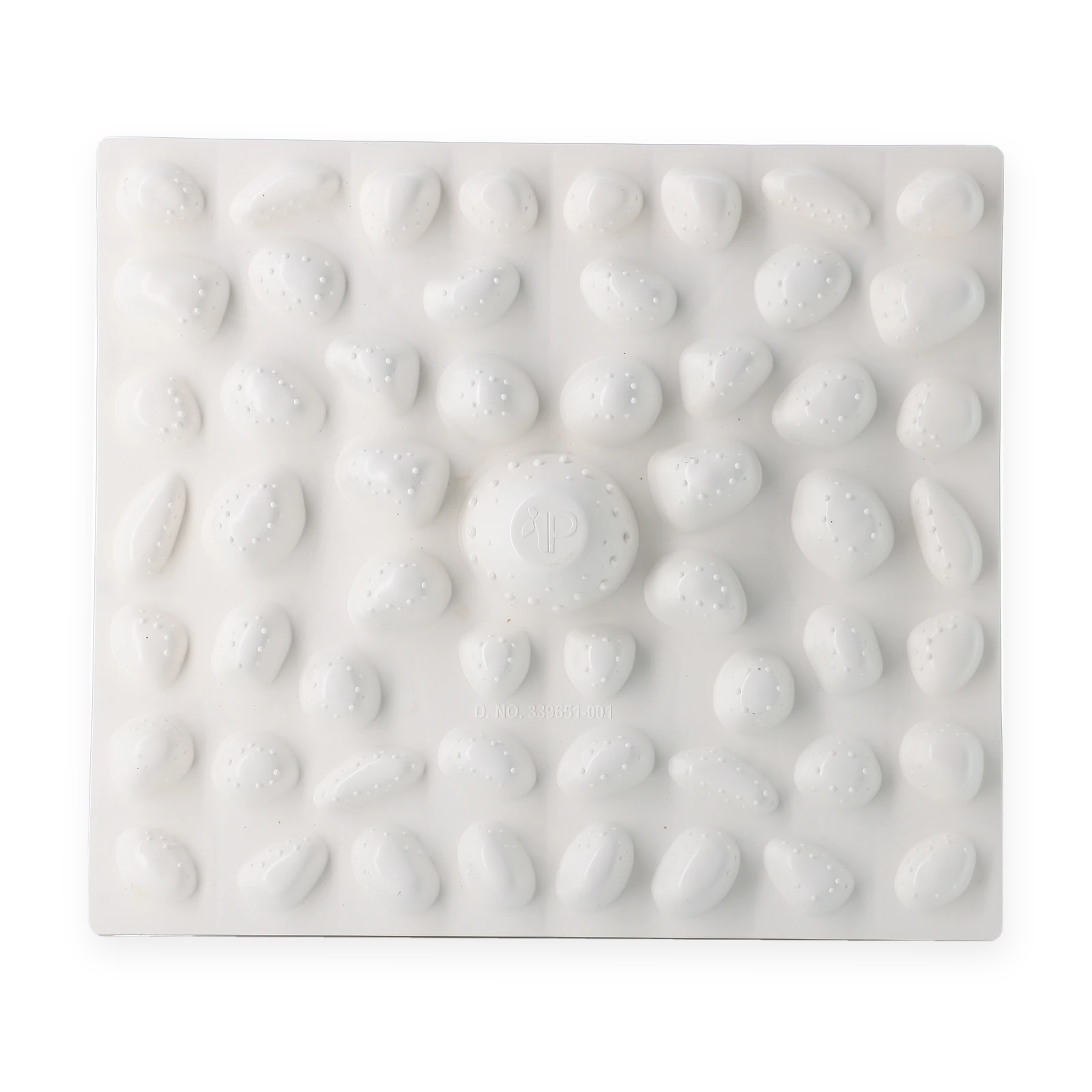
Acu Flex
Acu Flex has 638 nodes across 55 sculpted mounts. Used standing barefoot, it gives a medium-to-firm feel between gentle AirSeat and the taller contours of Pebble Path.
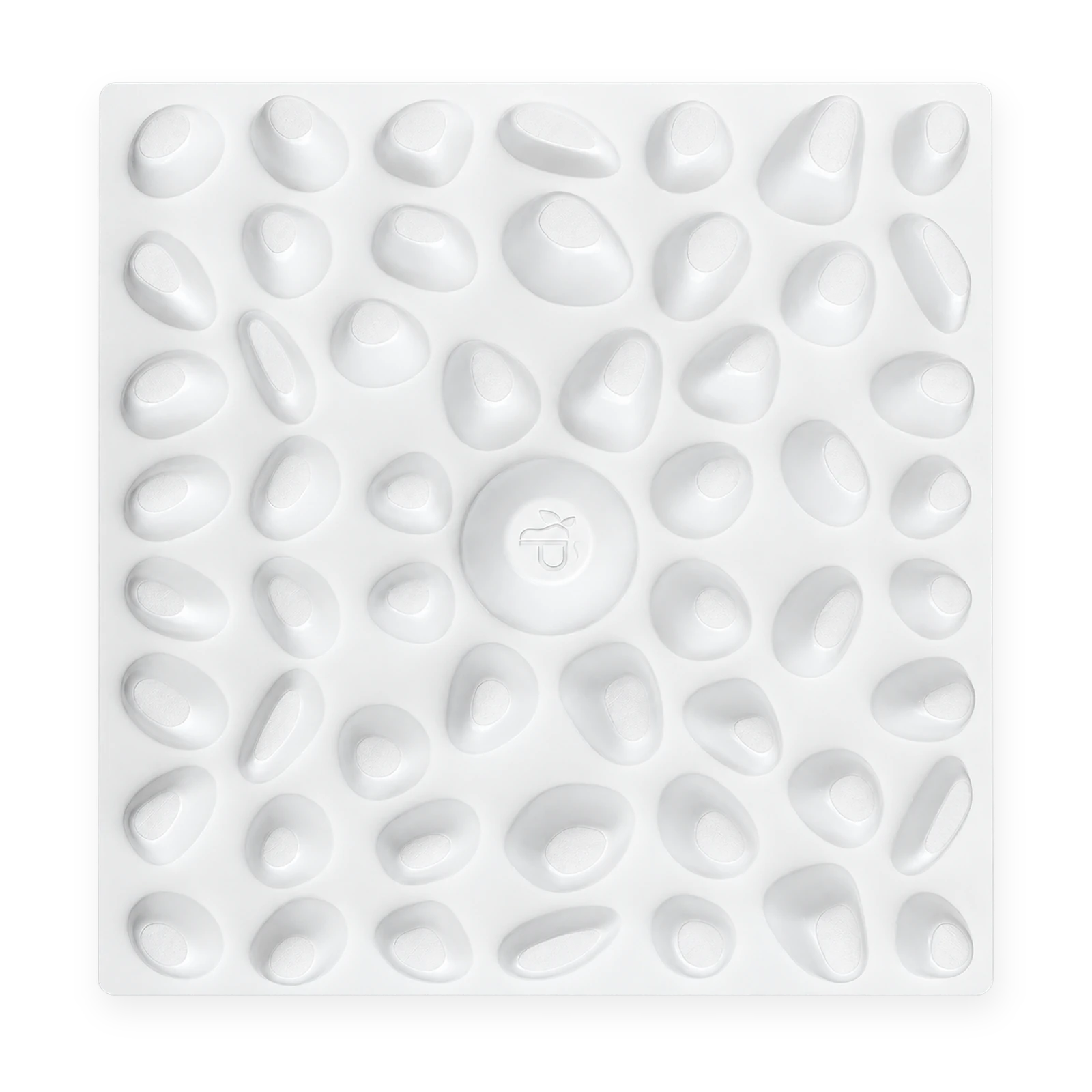
Pebble Path
Pebble Path is the firmest plate in the collection. Its tall, pebble-shaped contours give a pronounced texture under bare feet, for customers who prefer a firmer standing surface.
Power and running needs
Electric foot massagers need mains power or charging, and often have controls, settings and sometimes an app. That adds features to sell, but also adds instructions, chargers and electronic components to support after sale.
Plates and mats need no power at all. There are no batteries to replace and nothing to charge, which keeps the customer explanation short and removes a common source of after-sales questions.
Portability and storage
Mats roll or fold and are light, but can be bulky once unrolled. Electric massagers vary from compact to large and heavy. Plates keep a fixed, compact footprint that sits on the floor at home, under a desk or by the door. In the SoleWell range, AirSeat and Acu Flex measure 34 × 33 × 5 cm and Pebble Path 35 × 34 × 5.5 cm, with unpacked net weights of 500–649 g.
Demonstrating in store
Electric products need a powered display, and demonstrations can be noisy. Mats are often demonstrated lying down, which is hard on a shop floor. A plate can be tried in seconds by standing on it, or by sitting with feet on it, so it lends itself to a simple display stand and an unprompted try.
Returns and durability considerations
Returns risk tends to rise with complexity. Powered devices can develop electrical or mechanical faults, and customers may return them if settings are confusing. Mats can show wear on the points over time. Plates have no moving parts, which keeps the product simple; for the SoleWell range, a 5-year warranty applies, with partners handling claims and Parsana replacing products accepted under the warranty.
Whatever you stock, clear expectations reduce returns. Describe the product honestly, explain how to start gently, and include the safe-use cautions on pack and in listings.
Price points in general terms
As a general pattern, simple mats tend to sit at the accessible end of a shelf, electric massagers at the higher end because of their components, and well-made plates between or alongside them depending on materials and brand. Your own positioning will depend on your market and channel; SoleWell trade prices are shared after a qualifying conversation.
Where the SoleWell range fits
SoleWell is a non-powered plate collection designed in the UK and made in India by Parsana. Three plates form a step-up range: AirSeat (gentle, seated or entry-level standing), Acu Flex (medium to firm, 638 nodes across 55 mounts) and Pebble Path (firmest, tall pebble-shaped contours). The plates are designed to support a few quiet minutes of barefoot routine at home, at work or on the go.
For retailers, that means a compact, wipe-clean product with nothing to plug in, retail-ready packaging and a range that is simple to explain.
Safe-use cautions
Start gently with short sessions, and include these cautions on pack and in listings:
Stop using the plate immediately if you experience sharp or worsening pain, numbness, pins and needles, dizziness or other concerning symptoms. Seek appropriate medical advice if symptoms persist. Do not stand on any plate with reduced foot sensation (such as diabetic neuropathy), open wounds or foot infections, phlebitis or DVT, unhealed fractures or recent surgery, a bleeding disorder or while taking blood thinners, severe varicose veins, a pacemaker or other implant, or during pregnancy unless cleared by an obstetrician. Ask a doctor first if you have diabetes, neuropathy, a circulatory, joint, spinal or cardiovascular condition, or any chronic condition.
SoleWell plates are wellness products inspired by traditional acupressure. They are not medical devices and are not intended to diagnose, treat or prevent any condition.
Prefer to talk first?
Email or WhatsApp the UK office, or send a quick introduction from the application page.
Talk to the UK office about stocking SoleWell.
Tell us about your store or channel, and we will discuss which plates suit your customers.